Affichage des articles dont le libellé est Biology. Afficher tous les articles

jeudi 16 décembre 2010

# The obsession for decay in A Zed and Two Noughts by Peter Greenaway


I just rewatched A Zed and Two Noughts by Peter Greenaway (1985) and I am still amazed by the depiction of the two main (twins) characters for decay.
In fact, in this film, they set up a series of biological observation devices that photograph very three seconds an organic body in decomposition in order to compose a accelerated cinematographic piece of its complete putrefaction.
Greenaway actually introduces very quickly in the narrative this obsession as the first sentence pronounced in the film by those characters after the death of their two wives is: "How fast does a woman decomposes ?".

dimanche 7 novembre 2010

# Abhominal by Jason Hopkins

Jason Hopkins develops a compelling digital art work entitled Abhominal that illustrates a beautiful hybridization of geometrical normative structures with a tumorous organic flesh. His "bodies" are as much striking to me that it obviously evokes the hyperactive use of uncontrolled topological surfaces in current architecture. Jason Hopkins proposes a much more interesting vision of not only a surface, but also its content, the flesh, which is not without recalling Marcos Cruz's interest (see his manifesto for boiteaoutils).

However, what I just wrote is only my interpretation as an architect and I wanted to have Jason's "version" of his own work which is the very short text that follows:

"I am fascinated by mankind’s pursuit of ‘perfection’. Through the instruments of science we strive to categorize, understand, rearrange and ultimately tame the natural world around us. My sketches are explorations of possible genetic futures where mankind has achieved this perfection, where science has ironed out the inadequacies of being human."


Biostructure 2

Human Reconfiguration VI

Human Reconfiguration IV

Human Reconfiguration X

Human Reconfiguration XIX

Olympian I

Human Reconfiguration XI

Human Reconfiguration XII
Human Figure Study III

mercredi 9 septembre 2009

# SWARM /// The Brooklyn Pigeon Project


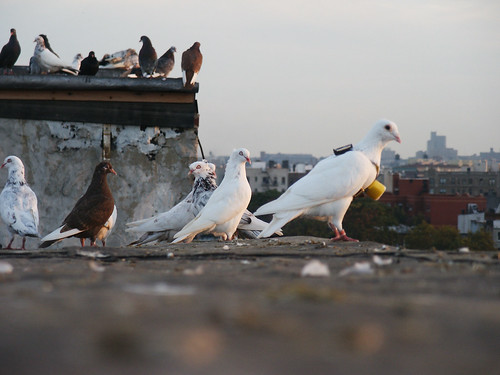
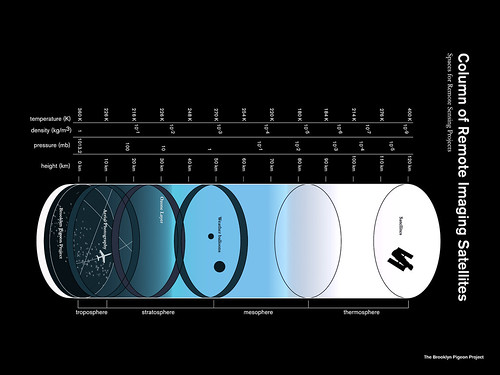
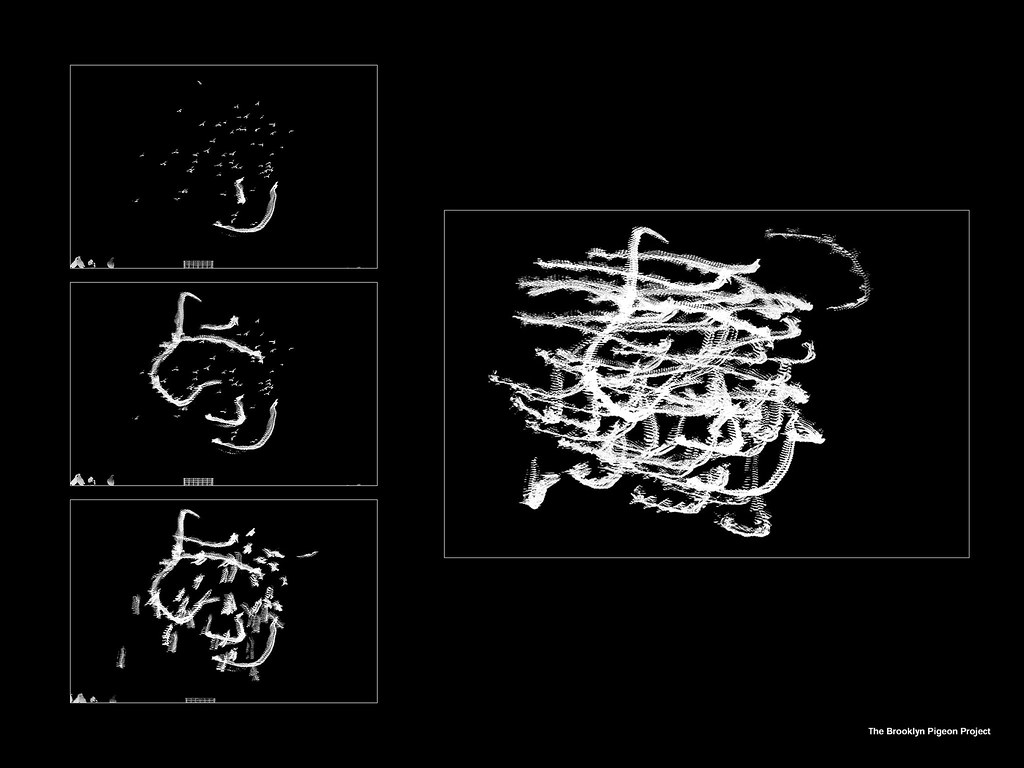
In 2004, the young architects Ben Aranda and Chris Lasch have realized a research on the swarm phenomenon of homing pigeon flight the " brooklyn pigeon project, a terraswarm project".
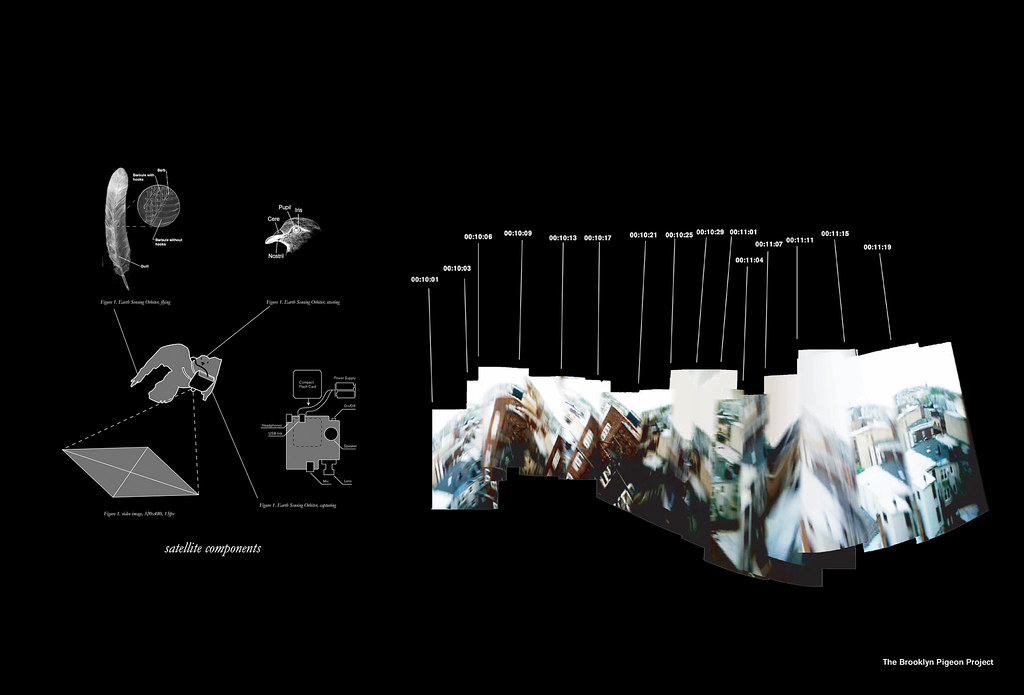
They used small localization devices that were carried individually by each Pigeon.
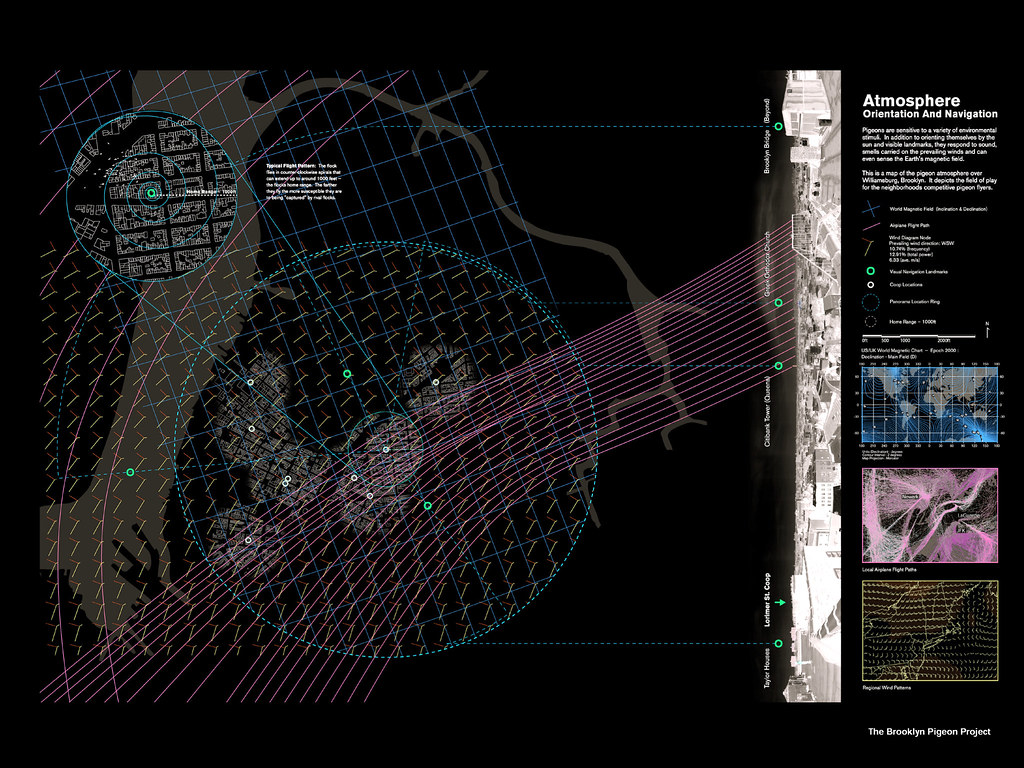
They measure and observed the flight of each pigeon and then they have done a modelisation/visualization like maps and diagrams of the itinerary of the birds that is linked to the atmosphere of the neighborhood.

More in their book Tooling (Pamphlet Architecture 27)
More on the Aranda/Lasch Flickr account

PHOTO CREDIT:
Peter Hall


mardi 8 septembre 2009

# SWARM /// Ants, termites, bees, birds, fishes etc.

Here are two articles to introduce the swarm as an intelligent animal group. One is from the National Geographic, it is very complete and tries to see very much the human application (see also the photographs gallery) and the other is from the New York Times and even if it more concise, it proposes those two diagrams which are very important to understand how those colonies of ants and other animals evolves as swarm to create a collective intelligence.

dimanche 5 octobre 2008

# Ant Farm

Amazing video of an huge real ants' (this time) farm, cast and then disintered.


samedi 12 juillet 2008

# Nikon Small World


Eh non ce n'est pas de l'art abstrait ! Il s'agit en fait de photographies microscopiques respectivement du mollusque Patella Vulgaris, de l'acide dimethylbenzenesulfonique et d'une agate.
Chaque année depuis 1977 Nikon Small World organise un concours de photos microscopiques. Les vingt meilleures de chaque année sont visibles sur le site officiel.

mardi 6 mai 2008

# Les puissances de 10 par Charles Eames


Superbe film sur la totalité des échelles connues par l'Homme. De 10^24 m à 10^-16 m. Une exploration dans l'infiniment grand et l'infiniment petit, à l'image du travail de l'architecte qui se doit d'explorer les diverses échelles de l'environnement sur lequel il agit.

mardi 13 novembre 2007

# FORM FINDING

Bon je voulais préciser quelques petites choses par rapport au travail de recherche de forme de Buckminster. Il s'appuyait bien évidement sur les lois physiques (mathématiquement exprimées) qui régissent le résistance des matériaux et autres modélisations scientifiques mais aussi beaucoup sur son instinct et une observation intelligente et rigoureuse de la nature. Par exemple pour il a pu s'inspirer des diatoms qui sont des organisme marin microscopique très performant et notamment grâce à leur coquille très solide.
Quelques uns de ces organismes hyper impressionnant sont représenté sur cet image :

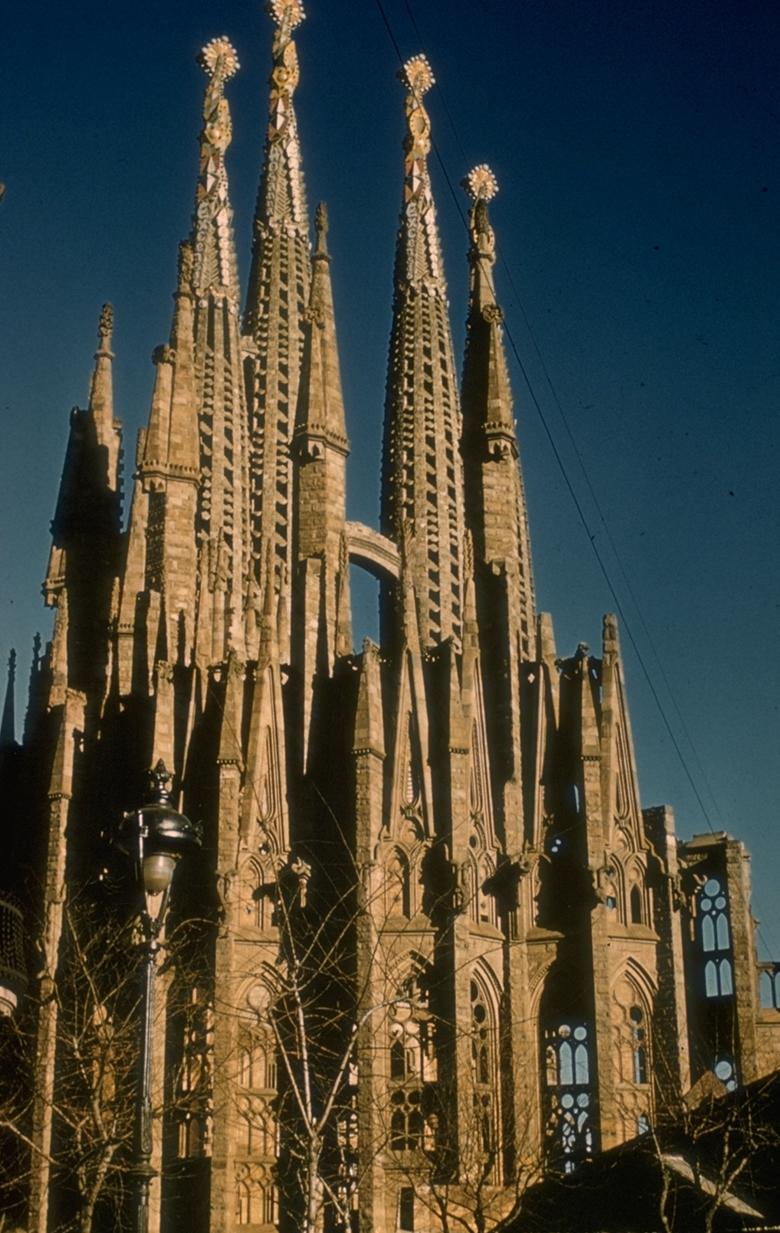
Cette démarche d'observation de la nature, où de réappropriation de ses principes structurels ne sont pas nouveaux, on peut regarder le travail de Gaudi pour la Sagrada Familia pour les colonnes en arborescence comme pour la forme globale.


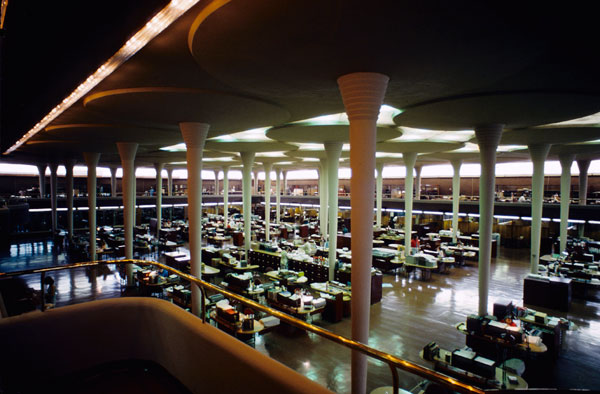
Même chose de façon moins directe pour les colonnes du Johnson Wax Headquarter de F.Lloyd Wright.